Scandinavian Christmas Clipart: A Designer's Stitch-Test Review
As someone who has spent years turning digital files into tangible, stitched treasures for clients and craft fairs alike, I approach every new embroidery design with a mix of excitement and skepticism. You do not just buy a file; you invest in the potential of your next finished product. Today, I am evaluating the Scandinavian Christmas Clipart to see if it truly delivers on its promise of cozy, minimalist charm when transferred from a screen to fabric. This review is not about marketing fluff but about practical application for embroidery designers, small business owners, and Etsy sellers looking to elevate their holiday collections.
The First Impression: Mood and Visual Personality
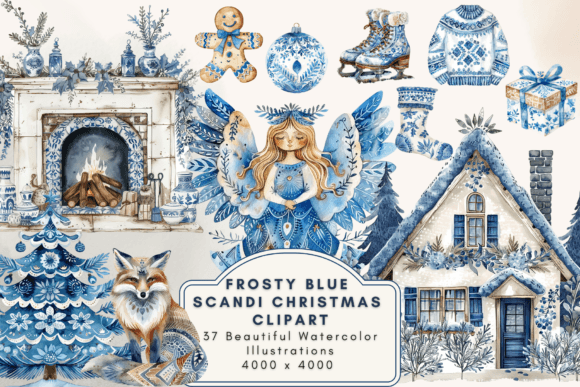
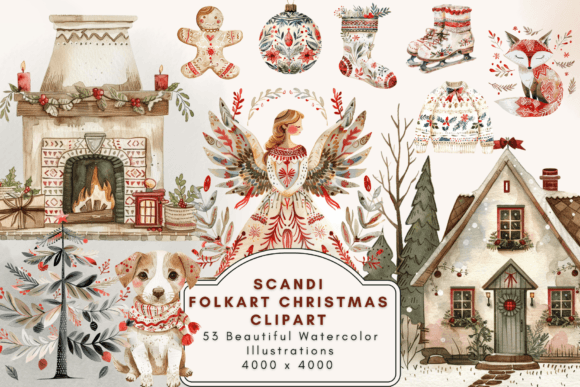
When I first opened the folder containing this set of Illustrations, the immediate feeling was one of quiet warmth. Scandinavian aesthetics are often defined by clean lines, negative space, and a specific kind of winter nostalgia that feels timeless rather than trendy. The Scandinavian Christmas Clipart captures this perfectly. It avoids the cluttered, chaotic look of traditional holiday graphics, opting instead for a refined simplicity that translates exceptionally well to thread.
In the world of machine embroidery, visual personality is everything. A design must hold its shape under tension without losing its soul. These designs possess a distinct geometric elegance. They feel structured yet soft, relying heavily on running stitch outlines and delicate satin stitch fills to create depth. For a designer eyeing this for a boutique collection, the mood is right: it speaks to customers who value craftsmanship and understated luxury over loud, mass-produced decor. It is the kind of imagery that makes a customer pause and think, "I want this on my own home."
Real-World Application: From Screen to Stitch
Let me take you through a real scenario I recently considered. Imagine preparing a custom embroidered tote bag for a local holiday market. The goal is a high-end gift item that stands out among the sea of generic red and green ornaments. I pulled up the Scandinavian Christmas Clipart as a candidate. The layout is spacious, which is a massive advantage here. On a canvas tote, you have a large, relatively flat surface, allowing the design to breathe.
I imagined stitching this on a natural oatmeal-colored cotton canvas using ivory and deep forest green threads. The contrast would be subtle but sophisticated. Unlike dense fill stitches that can make fabric stiff and prone to puckering, these designs likely utilize open areas that keep the fabric drape intact. This is crucial for a functional item like a tote or a kitchen towel where stiffness is undesirable. The design fits naturally into categories like custom apparel, sweatshirt embroidery, and even baby embroidery for nursery wall hangings.
For an Etsy seller, the versatility is a goldmine. The same design assets could be adapted for embroidered patches on denim jackets, stamped onto pillow covers, or featured on tea towels. The clean lines ensure that the design remains recognizable even when scaled down for smaller items like caps or hats. When a customer sees a beautifully stitched moose or a simple snowflake in this style, they recognize a level of care that suggests a premium handmade product.
Navigating Challenges: Where Caution is Key
However, no design is perfect for every situation, and honest evaluation requires us to look at the limitations. The minimalist nature of Scandinavian Christmas Clipart means that detail is king. If you attempt to use this on a highly textured fabric like chunky wool or bouclé, the fine lines might get lost in the weave. Similarly, on thin, stretchy fabrics like lightweight jersey, the stability required for satin stitch sections can cause issues if the proper stabilizer is not used.
I would advise caution when placing these designs on curved surfaces like baseball caps. While the shapes are simple, the curvature can distort the spacing between elements, potentially ruining the balance of the composition. Furthermore, on dark fabrics, the clarity of light-colored outlines depends entirely on the thread choice. If the contrast is too low, the design loses its definition. For commercial embroidery projects involving frequent washing, such as aprons or workwear, one must ensure the stitch density is sufficient to withstand friction without fraying, especially around the edges of the fill stitch areas.
Small hoop sizes present another hurdle. If the original artwork contains tiny lettering or intricate corners, downsizing them for a child's onesie or a small pocket square can result in a muddy mess. The thread thickness simply cannot resolve those minute details. In these cases, the design might need to be simplified or resized significantly to maintain legibility.
Impact on Brand Value and Customer Trust
The aesthetic quality of your embroidery directly influences customer trust. A sloppy stitch job or a design that pucker badly signals amateurism. Conversely, a crisp, well-executed Scandinavian Christmas Clipart design elevates the perceived value of the entire item. When a buyer receives a personalized gift with clean lines and balanced spacing, they perceive the maker as professional and attentive.
This visual appeal extends to your digital presence as well. High-quality mockups featuring this design can drive engagement on social media platforms. The clean, modern look photographs beautifully, making it ideal for printable mockups and digital product previews. For a creative entrepreneur, this consistency helps build a cohesive brand identity. Whether you are selling holiday gifts, wedding gifts, or small shop products, maintaining a specific visual language ensures that your audience knows exactly what to expect from your craft business.
Essential Notes for the Embroidery Designer
Before you hit the start button on your machine, there are critical steps to ensure success. First and foremost, always test the design on scrap fabric that matches your final project material. This allows you to check thread color contrast and observe how the stitch density interacts with the fabric texture. Do not skip this step; it saves money and reputation.
Review the hoop size requirements carefully. Ensure your machine setup accommodates the dimensions without cutting off essential elements. Inspect small details closely in both full color and black-and-white mockups to ensure nothing gets lost in translation. If you plan to sell finished items or distribute these as digital embroidery files, confirm your licensing terms explicitly. Some designs allow for personal use only, while others grant rights for commercial production.
Finally, consider the end-use of the product. Is it a decorative pillow that will sit still, or a tote bag design that will be carried daily? Adjust your stabilizer choices and thread types accordingly. By treating the Scandinavian Christmas Clipart with this level of scrutiny, you transform a simple graphic into a premium asset. It is about more than just stitching a pattern; it is about creating a reliable, beautiful experience for the person holding the final product. With the right preparation, this design set offers a fantastic foundation for your upcoming holiday season projects.